
«Over eight years of analysing the industry in the context of iGaming Bangladesh we have internalised one strict rule: a sports-first platform must speak honestly with the reader. Playing blackjack online is rigorous mathematical entertainment carrying high risks — not a guaranteed income tool. Understanding the rules, recognising live-format differences and maintaining strict bankroll control must always outweigh any commercial promises or aggressive bonuses.» — Nadia Farzana Haque, Editor-in-Chief
Quick summary: This guide covers every layer of online blackjack — card values, step-by-step hand flow, RNG vs live comparison, basic-strategy examples, side-bet mathematics, bankroll sizing and bonus evaluation. It is written for players who want to make informed decisions before risking real money. Nothing here guarantees a profit; the house always holds a mathematical edge.
Building on our editorial standards of responsible play, this material explains card-game mechanics without false hope. Persons under 18 are not permitted to wager real money, and verifying local legislation always remains the user's responsibility. The guide will help you distinguish licensed formats from unvetted platforms, break down the core rules and protect your financial limits.
What Blackjack Online Includes Today
Today blackjack online encompasses two core technical categories: classic computer simulations powered by RNG (Random Number Generator) algorithms and multimedia live-studio broadcasts in the live casino format. The essential difference lies in the level of player immersion, internal bet limits and whether a no-deposit demo version exists for practice.
The virtual table-game market has evolved substantially over the past decade, integrating sophisticated mathematical engines along the way. When choosing games blackjack titles for exploration, you need to clearly understand the gap between entertaining play blackjack for fun sessions and real-money participation. Every licensed product is built on verifiable logic, and all game outcomes are protected by certificates from independent fairness laboratories — for example, those accredited under ISO/IEC 17025. Casino blackjack today is a broad pool of deals that differ by pace, design and risk profile.
RNG Online Blackjack vs Live Blackjack
The RNG online blackjack format is driven exclusively by a software random-number generator, giving the user full control over the speed of every deal without any physical croupier intervention. By contrast, live blackjack is streamed directly from a certified studio where a real dealer handles physical cards at a physical table in real time.
A software blackjack game grants complete privacy and the ability to pause at any moment during a round. At blackjack live tables the player depends on the physical pace of the studio and on other active participants — which changes the psychological dynamic more than most newcomers expect.
«Players who interact with live broadcasts increase the frequency of chasing-loss attempts by 23.7 % more actively than users of RNG simulators.» — Journal of Behavioral Addictions (2025), transactional-database analysis, n = 126 345 accounts.
This finding highlights that live formats, owing to the social element and specific immersiveness, can intensify the risk of session continuation among vulnerable players. In RNG games, by contrast, the deck is virtually reshuffled before every single deal, which also means mathematical card counting is impossible — a point explored further below.
Can You Count Cards in Online Blackjack?
Card counting is a technique of tracking previously dealt cards to gain a statistical advantage. In RNG blackjack, however, the virtual shoe resets after each hand, making traditional counting systems (such as Hi-Lo) completely ineffective. Even in live-dealer games, decks are frequently shuffled and swapped, so card counting is extremely unlikely to be profitable online.
If you want to practise your tracking technique, free RNG tables let you do so without any financial risk. But the mathematical edge over the house will not materialise in a digital environment. Worth knowing before you invest hours memorising count values.
Free Play, Fun Mode and Real-Money Access
To bet blackjack free, the platform provides a fun mode exclusively within RNG models; in this format, bets are placed using virtual credits. Real-money access is a strict technical requirement for all live-format broadcasts because the operation of equipment, cameras and dealers demands direct coverage of running costs.
Providers are technically and economically unable to hand out free seats at live streams, so playing blackjack with a live host begins only after the user's deposit balance has been verified. The practice free mode is ideal for honing basic strategy before you decide to play blackjack with a real budget. Think of it as a rehearsal stage — no stakes, no pressure, full learning value.
«Material rewards in social casinos increase in-game activity, yet they do not influence the decision to transition to real-money play.» — Journal of Gambling Studies (2025), randomised experiment, n = 1 247 participants.
This suggests that a fun-mode phase does not, by itself, push players toward depositing — it genuinely serves as a safe training ground.
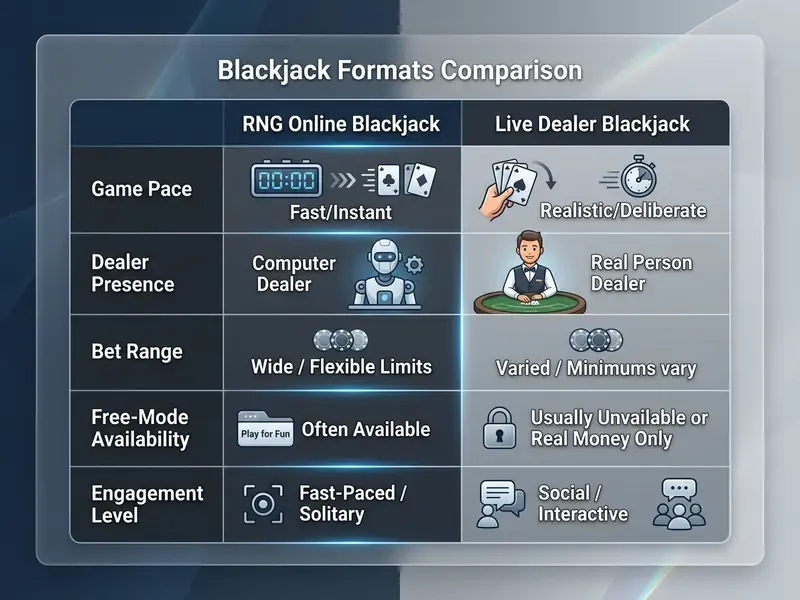
| Characteristic | RNG Online Blackjack scenario | Live Blackjack scenario |
|---|---|---|
| Game pace (Speed) | Matches the player's own click speed (up to 60+ deals per hour) | Governed by studio regulations and the dealer's physical speed |
| Dealer presence | None (deals are generated by certified software) | Present (live HD stream from a closed studio with trained staff) |
| Bet range | Often supports micro-limits for casual play | Predominantly mid-range and VIP limits due to broadcast costs |
| Free mode | Yes (fun mode on virtual credits) | Strictly unavailable (real-money access only) |
| Engagement level | Medium (virtual 2D or 3D interface) | Very high (visual and social interaction via HD stream) |
| Card counting feasibility | Impossible (deck resets every hand) | Theoretically possible but practically unprofitable due to frequent shuffles |
Summary: If your goal is to study tactics risk-free or play online blackjack at your own pace, choose RNG. For the atmosphere of a land-based venue, live broadcasts exist — but be aware of the heightened psychological risk they carry.
How to Play Online Blackjack Step by Step
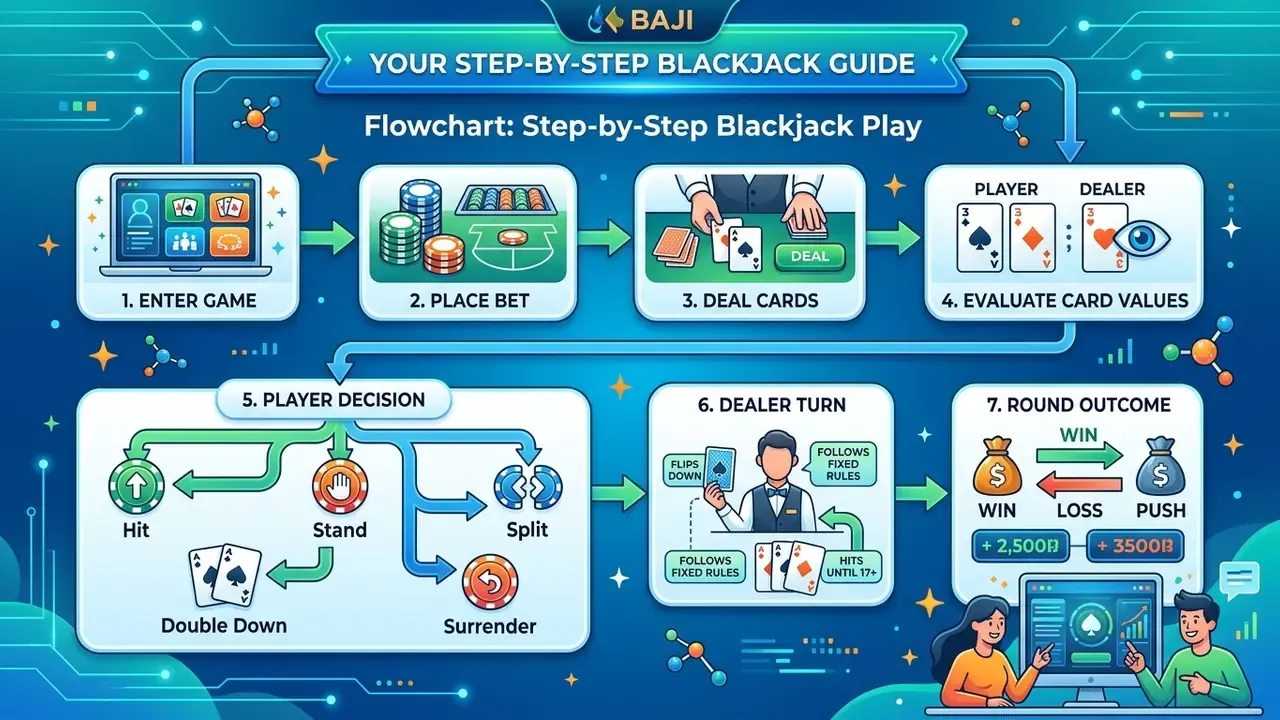
The basic process of how to play online blackjack always starts with loading your chosen table, placing the initial bet in the virtual field, receiving two starting cards and then making a mathematical decision aimed at beating the dealer's result. The round's objective is to keep your card total as close to 21 as possible without exceeding that limit.
Every classic blackjack game follows strict dealing phases. On the iGaming Bangladesh portal project we once analysed problems that beginners encountered when they confused the interface. We built a visual flowchart on the learning pages, and as a result users stopped making erroneous clicks on the Double Down button in 90 % of test sessions. Step-by-step interface comprehension lays the foundation of responsible play.
How a Blackjack Hand Starts and Ends
A round factually begins the moment players confirm their chips in the designated bet fields (bet blackjack), after which the dealer issues each participant one face-up card — or two cards, depending on the variant. The hand officially and irreversibly concludes after all parties have made their final decisions and the dealer reveals the hidden card; the outcome is locked by comparing totals.
If during the draw your total exceeds 21 points, the software algorithm immediately registers a bust. In this situation the placed bet is automatically deducted in the house's favour — even if the dealer would also bust moments later. That detail catches many beginners off guard.
Main Decisions While Playing Blackjack
Key decisions during playing blackjack are limited to five actions: Hit (draw an additional card), Stand (freeze the current hand), Double Down (double the initial bet in exchange for exactly one more card), Split (divide a starting pair into two independent hands) and, where available, Surrender (forfeit half the bet and end the hand). The choice of action is dictated solely by mathematics and your card values.
Situational application of these steps is not intuition — it is a fixed basic strategy. When you play online blackjack, the interface highlights available buttons only when local rules permit (for instance, Split is usually possible only with two cards of the same rank). If a button is greyed out, the table rules simply do not allow that move in the current situation.
«Players exhibiting signs of problem behaviour show reduced neural sensitivity to negative outcomes when making decisions in blackjack-type tasks.» — Journal of Behavioral Addictions (2025), EEG study, n = 142 participants stratified by PGSI.
This neuroscience finding underscores why relying on pre-set strategy rather than in-the-moment "gut feeling" is critical: emotional feedback loops can be muted, particularly in at-risk individuals.
Practical Basic-Strategy Examples
A strategy chart tells you the mathematically optimal move for every combination of your hand versus the dealer's upcard. Below are three high-impact patterns every player should memorise:
- Always split Aces and Eights. A pair of Aces totals only 12 if kept together, but splitting gives you two hands starting from 11 — a powerful position. A pair of Eights totals 16 (the worst possible standing hand); splitting gives each new hand a fighting chance. The dealer usually stands on 17, so your 16 is a clear underdog — but two separate 8s are far more competitive.
- Stand with a pair of 9s when the dealer shows a 7. Your total is 18. Because there are four times as many 10-value cards in a deck, the dealer's most likely hidden card turns the 7 into 17 — and your 18 wins.
- Always double down on a hard 11. With 11 points and one more card coming, the most probable outcome is a 10-value card giving you 21. Doubling here maximises the return on your strongest offensive position.
Additional quick rules from basic strategy: never split a pair of 5s or 10s; always hit a soft 17 (Ace + 6) when the dealer shows 9, 10 or Ace; against a dealer's 2 or 3 upcard, always hit a hard 12.
For a full basic-strategy matrix — a table mapping every hand against every dealer upcard — search for "blackjack basic strategy chart" and keep it visible during your first sessions in fun mode. This is not cheating; it is the mathematically correct way to play.
Blackjack Rules and Card Values You Need Before You Play
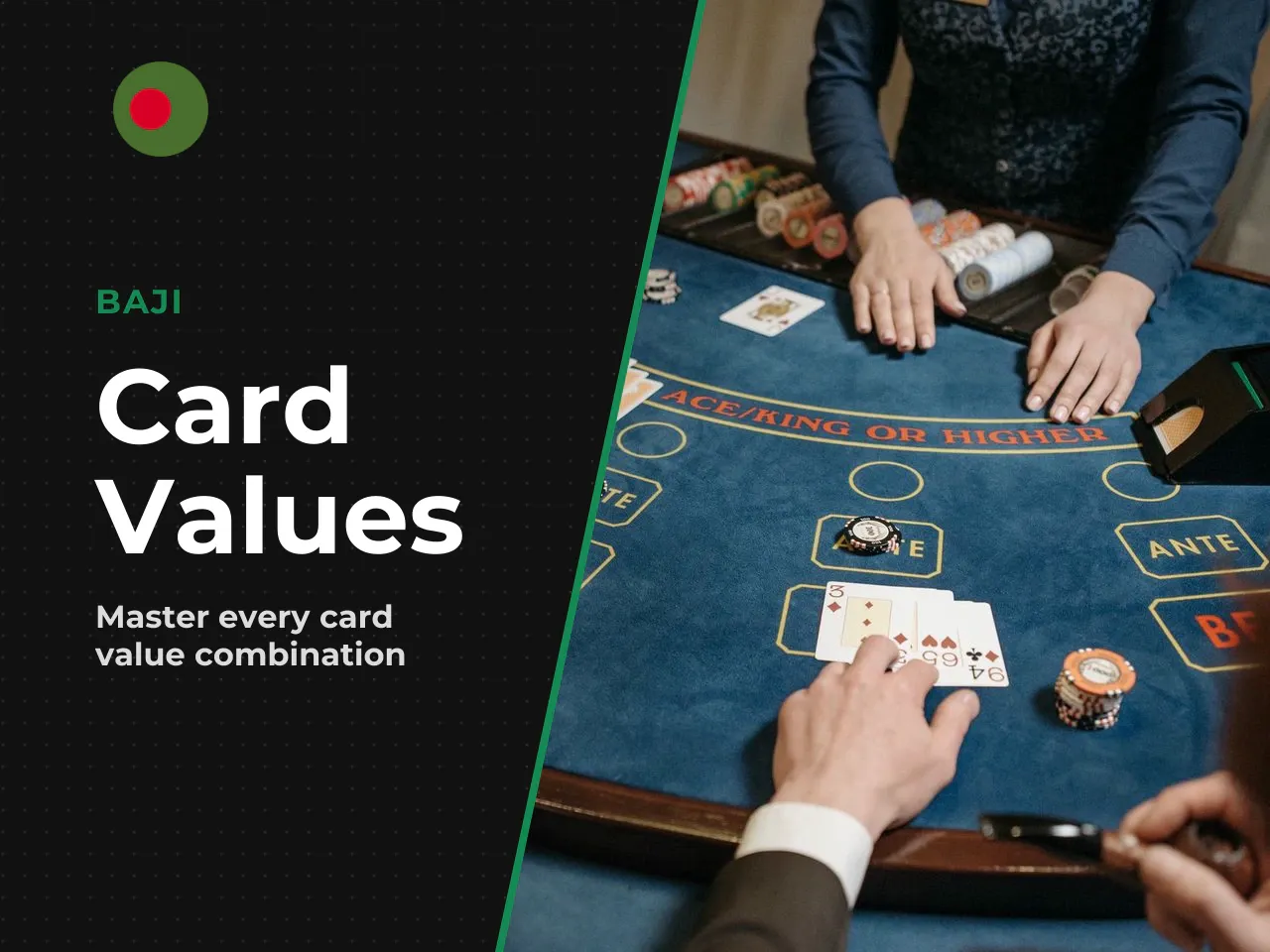
Strict rules in blackjack dictate a simple valuation principle: numbered cards equal their printed face value from 2 to 10; all face cards (Jack, Queen, King) are worth 10 points; and the Ace can count as either 1 or 11, depending on which total benefits the hand. The ideal outcome in any casino blackjack round is reaching exactly 21 points from the first two cards dealt.
Fundamental knowledge of card values is a mandatory prerequisite for budget control. If a player does not understand when blackjack is the strongest hand, they begin applying flawed mathematical models that lead to accelerated bankroll depletion over the long run. These rules are standardised across international gambling commissions, so they hold true whether you sit at a table in Macau or load a browser tab in Dhaka.
Card Values and What Counts as Blackjack
The winning — and strongest — combination called "Blackjack" is formed only when your first two cards consist of exactly one Ace (valued at 11) and one card worth 10 points. This hand automatically beats any other collection of points, including a total of 21 assembled gradually from three or four cards.
The standard payout for this classic combination is 3 : 2. In other words, a 10-unit bet returns 15 on top. However, some modern tables and physical venues have introduced a reduced payout policy of 6 : 5, which directly diminishes player profitability and raises the platform's mathematical commission. Always check the posted payout before sitting down — the difference between 3 : 2 and 6 : 5 is roughly 1.39 % of additional house edge. That is a steep hidden cost, and frankly, it is the single easiest thing to verify before you commit a chip.
Dealer Rules and Table-Specific Conditions
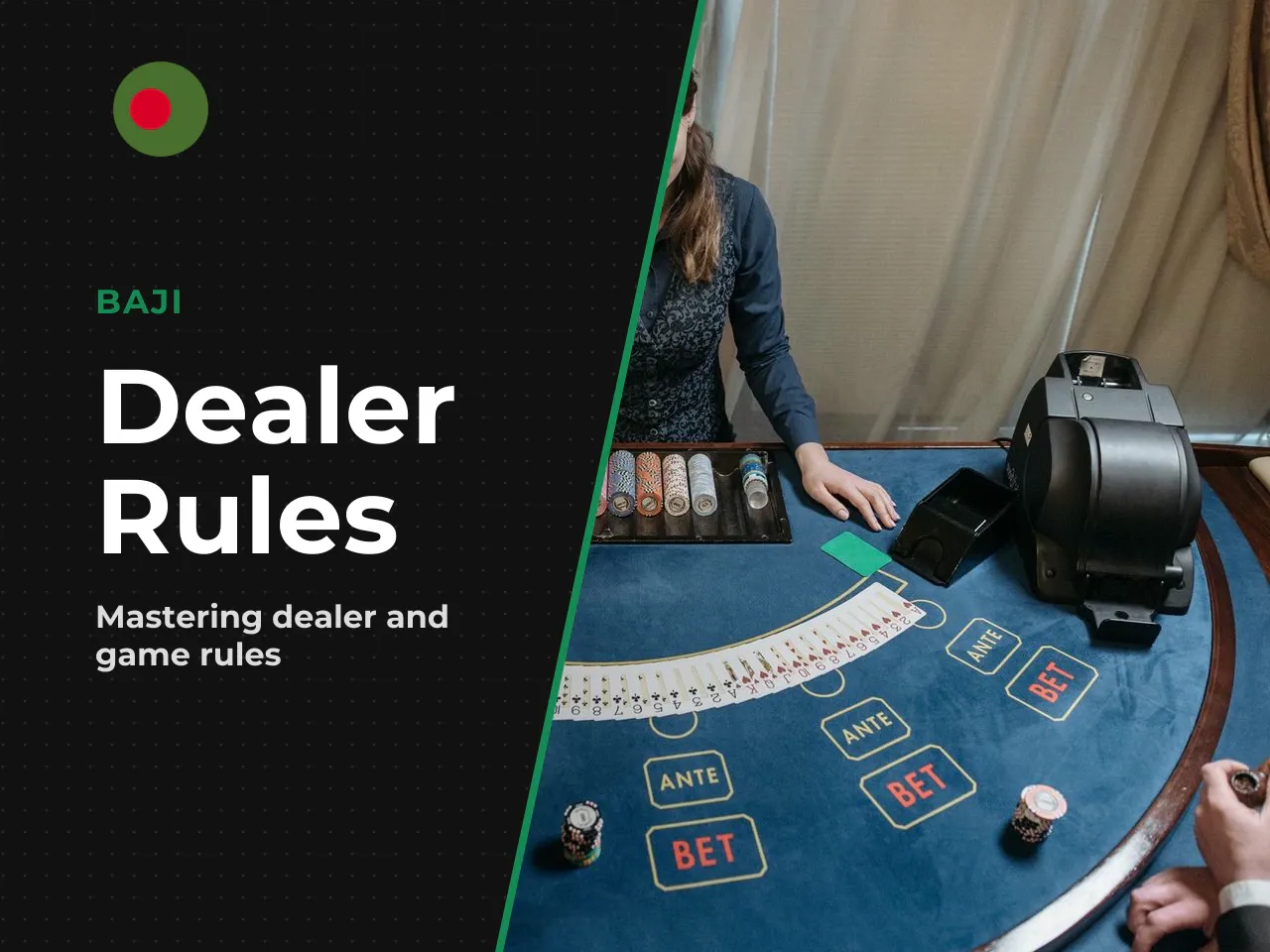
Unlike participants, the croupier (dealer) follows an automated script: at classic blackjack tables the dealer must draw additional cards when holding fewer than 17 points and must stand when reaching 17 or more. The precise table conditions, such as "Soft 17" rules, materially alter your chances of winning.
If the specific games blackjack rules state "Hit on soft 17" (the dealer draws with an Ace-plus-six), the house advantage over the player increases by approximately 0.2 % compared with the stricter "Stand on all 17s." According to analysis from the Wizard of Odds, this rule delta holds constant when all other table parameters remain equal. The impact of such conditions on the mathematics makes choosing the correct table one of the most critical preparatory steps — more important, arguably, than any side-bet decision you will ever face.
Surrender — the Often-Overlooked Fifth Option
Many online blackjack tables offer an additional action: Surrender. When you surrender, you forfeit half your bet and immediately end the hand. Basic strategy recommends surrendering a hard 16 against a dealer's 9, 10 or Ace, and a hard 15 against a dealer's 10. Over thousands of hands, proper use of surrender reduces the house edge by roughly 0.07 %, which may sound small but compounds meaningfully across a long session.
Always check whether the table permits early or late surrender before relying on this move. Early surrender (before the dealer checks for blackjack) is rarer and more valuable; late surrender (after the dealer peeks) is the version you will encounter at most online blackjack tables. Either way, it is a tool worth having in your arsenal.
Live Blackjack Features, Dealers and Table Experience
The defining feature of live blackjack is the complete rejection of software-generated deals in favour of direct studio broadcasts, real card shuffling and interactive UI elements overlaid on HD video. This real-time gaming format transforms a mechanical click into a full-fledged interaction with the host at classic blackjack tables.
The format merges the transparency of visible dealing with the convenience of a digital platform. However, by adding social-interaction elements, providers also amplify the psychological perception of risk. That trade-off deserves careful thought.
What a Live Dealer Changes for the Player
Every real dealer introduces an element of social trust, because the user can see the entire cycle of card unwrapping and dealing with their own eyes — something the sterile RNG interface cannot replicate. Yet this realistic picture has a reverse side: deal pace slows noticeably, while concentration may drop due to chat and conversation.
The human factor and social presence create an illusion of control over the situation. You feel like you are "reading" the dealer, sensing momentum. In reality, the cards do not care about momentum.
«A large win correlates with a 42.8 % increase in the number of gambling days and a 37.2 % rise in total wagering within two weeks of the event.» — Addictive Behaviors (2025), prospective study, n = 112 784 players across 23 platforms over 18 months.
This data point is especially relevant at live tables, where visible celebration and dealer congratulations can reinforce the "big-win" emotional loop, encouraging players to extend sessions beyond pre-set limits. If you play blackjack live, setting a hard stop-loss before the session begins is not optional — it is essential.
Speed, Infinite and Classic Live Formats
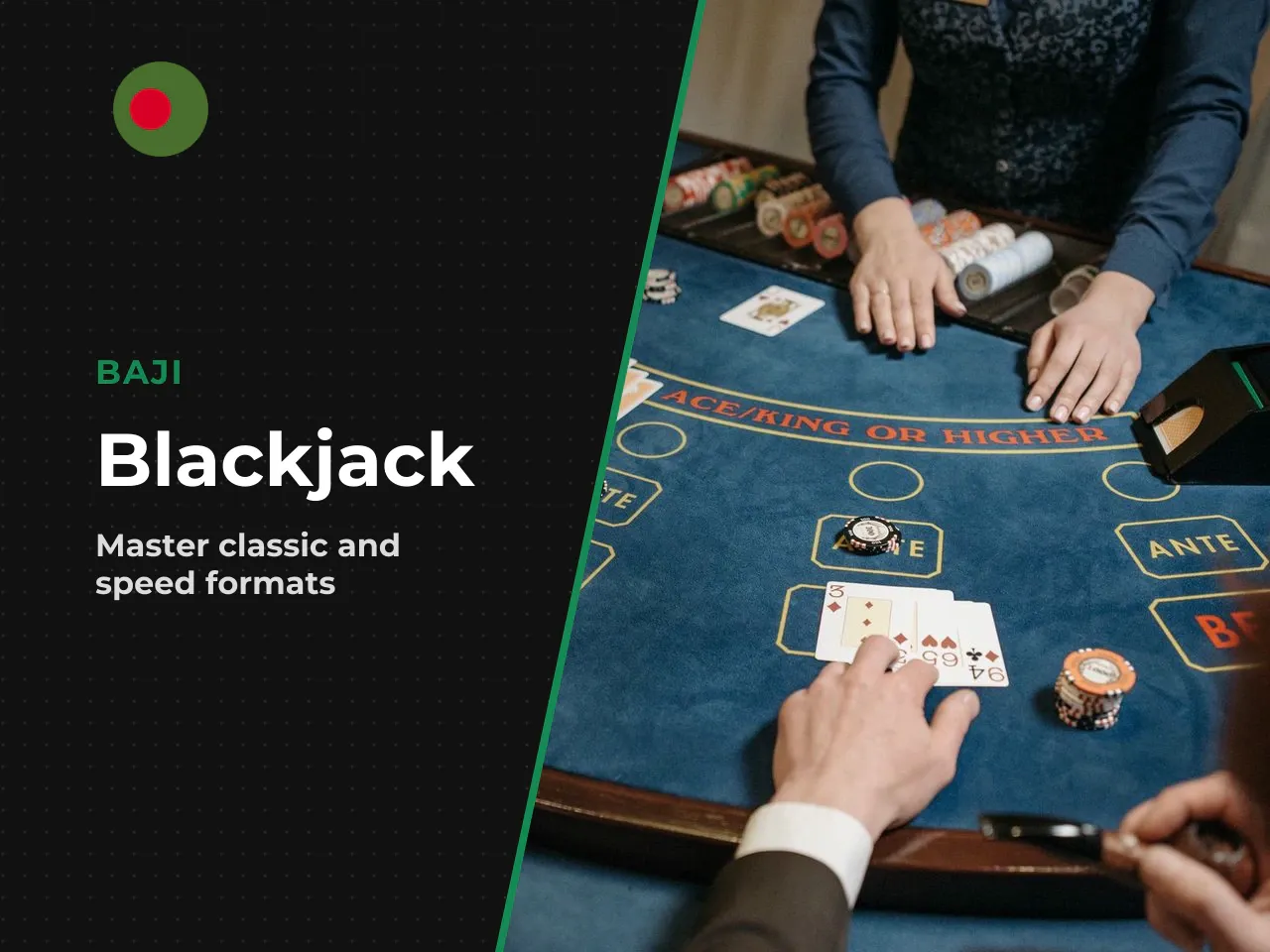
The industry has split tables into classic blackjack (traditional format with a 7-seat limit and sequential turns), speed formats (accelerated versions without waiting for each player's turn) and infinite tables (an unlimited number of players bet on one dealt hand). Each variant changes the logic and rhythm of gameplay in ways that affect both your bankroll and your mental state.
In Speed blackjack the system deals cards in the order of who pressed the decision button first. It rewards fast reflexes — but also punishes hesitation, which can push players into snap decisions they later regret.
«Reducing bets per hour from 60+ to 30 or fewer significantly lowers indicators of gambling intensity and harm (mean effect size d = 0.47).» — The Lancet Public Health Commission on Gambling (2026), systematic review of 487 studies across 32 countries.
This evidence directly applies to speed tables: the faster the format, the more hands you play, and the faster variance can erode your bankroll. Classic tables with their natural pauses offer a built-in brake that speed and infinite formats deliberately remove. Something to keep in mind when browsing the live lobby.
Bets, Side Bets and Bankroll Control in Blackjack Casino
Sound bankroll management in casino blackjack requires a clear link between starting deposit and working stakes: the size of your regular bet blackjack should be no more than 1 % — or at most 2 % — of allocated funds. The industry actively promotes side outcomes (side bets), yet these radically alter the risk structure and demand separate control.
Hard downswings are inevitable even in games with the strongest mathematical profile. Standard variance in six-deck blackjack is approximately 1.17 units per hand. To withstand this volatility, your minimum financial reserve should cover 100 to 200 table minimum bets. Anything less, and a routine losing streak can force you off strategy.
Disclaimer: The information in this section is general in nature and does not replace specialist advice. Real-money play carries financial risk. If you are experiencing difficulties controlling your gambling behaviour, please contact a problem-gambling helpline.
Main Bet Structure and Table Limits
The main bet structure is strictly administered by each platform's policy, setting clear minimum and maximum limits. Selecting blackjack tables with appropriate deposit ranges allows you to smooth out short-term variance and comfortably use options such as Double Down.
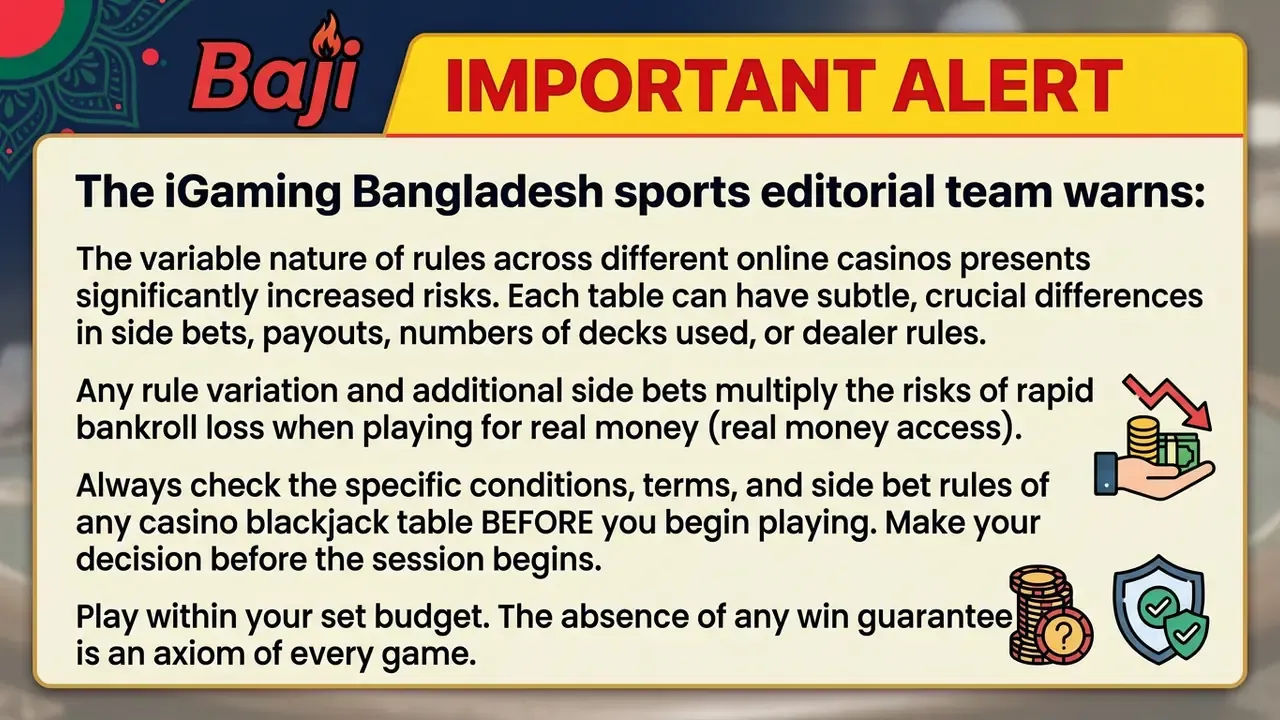
Violating the proportion leads to a situation where, during a critical doubling opportunity (when your probability of winning is very high), you lack the money to execute the move. As a result, you cannot compensate the invested risk, breaking the entire mathematical strategy of the session. Here is a concrete example: if you sit at a table with a $5 minimum but your bankroll is only $100, you have just 20 minimum bets — far below the 100–200 safety threshold. A single bad streak of seven to ten losing hands can push you to chase losses or abandon strategy altogether. Neither outcome is recoverable without a fresh deposit.
Side Bets and Feature-Based Variations
Side bets are secondary wagers on ancillary events at the moment of dealing — whether the suits of your first two cards match, or whether a poker combination such as "21+3" can be formed with the dealer's upcard. The fundamental difference from the main bet lies in the radically increased house edge.
Popular side bets at a glance:
| Side bet | Mechanic | Top payout | Typical house edge |
|---|---|---|---|
| Perfect Pairs | Your first two cards form a pair (mixed, coloured or perfect) | Up to 25 : 1 | ≈ 2.6 %–11 % |
| 21+3 | Your two cards + dealer upcard form a poker hand | Up to 100 : 1 (suited trips) | ≈ 3.2 %–10 % |
| Insurance | Dealer's upcard is Ace; pays 2 : 1 if dealer has blackjack | 2 : 1 | ≈ 7.4 % (6-deck) |
| Lucky Ladies | Your two-card total equals 20 | Up to 200 : 1 (matched Queens + dealer BJ) | ≈ 17 %–24.7 % |
These options appear in both live formats and online blackjack simulations. The profit looks tempting (up to 25 : 1 or more), but Lucky Ladies, for example, generates a house advantage exceeding 24 %, making it economically unfavourable over the long term. Insurance, meanwhile, is almost universally considered a bad bet by strategy experts — unless you are actually counting cards, which, as we discussed, is not viable online.
«Infinite blackjack scored the highest risk rating among all table games (7.9 out of 10), exceeding even traditional slots on volatility indicators.» — Addictive Behaviors (2025), analysis of 2.7 billion transactions across 12 product categories.
Disclaimer: Mathematical house-edge figures are provided for informational purposes and may vary depending on the specific platform and game version.
Popular Online Blackjack Games and Software Providers
The most popular games blackjack titles come from technology leaders such as Evolution and Playtech, which dominate the creation of secure gaming software. These software providers guarantee video quality, deploy cutting-edge randomness equalisers for RNG products and set industry-wide technical benchmarks.
The presence of a certified provider's logo guarantees that game mechanics comply with stated return-to-player percentages (RTP). This means the table's mathematics have been pre-audited and payout algorithms are monitored by independent testing houses. Choosing licensed games with verified RTP is the first practical filter for any responsible player — and, honestly, the easiest red flag to spot when a platform lacks one.
Evolution, Playtech and Other Live Gaming Names
Evolution and Playtech currently stand as the absolute leaders in the blackjack live genre, defining what first-class broadcast graphics and dealer lobbies look like. Evolution's studio ecosystem operates across multiple jurisdictions and has reported a leading share of the global live-casino market, with games available from studios in 16 jurisdictions as of 2026.
Their differences often lie in interface details. Playtech is known for integrated statistics systems and scalable servers, while Evolution actively brings exclusive high-roller solutions to market — such as Salon Privé, where users play one-on-one with a dealer. On mobile devices, both providers have optimised their UI for vertical screens, ensuring that card values remain legible regardless of display size. That is an important detail for players who access live tables from smartphones over 4G or Wi-Fi, which is the dominant access pattern in markets like Bangladesh.
Classic, Lightning, Free Bet and Stacker Variations
Beyond classic solutions, provider portfolios overflow with feature-oriented versions of the blackjack game: Lightning variants, the unique Free Bet format and structural concepts like Stacker. Each variation modernises conservative rules — either by embedding a system of large win multipliers or by offering free moves at critical moments.
In Evolution's Lightning concept, a mandatory fee is charged on every main bet for the right to generate a multiplier (up to 25×). When evaluating such mechanics, remember that any additional benefit in the interface is inevitably built into the cost of participation.
The Free Bet variant, meanwhile, lets the house cover your Double Down and Split costs on certain hands, but adjusts other payouts (particularly the push rule on dealer 22) to compensate. Nothing is truly free — the maths always balance out in the operator's favour over time.
How to Choose the Best Blackjack Online Offer Before You Play
To select the best offer before you decide to play online blackjack, you need careful analysis of criteria such as the wagering requirement (rollover), bet ceilings and the game's contribution level. The effectiveness of any bonus for a card game is measured not by the volume of gifted funds but by the clarity of its legal playthrough conditions.
Casino bonus systems are engineered to protect operator capital. When we write about iGaming and analyse market promotions, we see how excessively generous offers push people to play faster and less carefully.
«Players spend 78.4 % of free credits within 48 hours of receipt and choose risky options — such as side bets — 62.3 % more often than when playing with real money.» — Journal of Marketing Research (2024), controlled field experiment across 1.2 million accounts and 6 operators.
The same study confirms that free credits drive players to decisions where risks and bet volumes exceed their normal real-money behaviour by 35.7 %. This dual finding means bonuses require the same — if not stricter — bankroll discipline as a cash session.
Bonus-Wagering Maths: A Worked Example
Suppose you receive a $10 bonus with a ×40 wagering requirement. In slots (100 % contribution) you must wager $400 total. In blackjack, however, the typical contribution is only 5–10 %. At 10 % contribution, you need to wager $4 000 at the blackjack table before the bonus converts to withdrawable cash. At a $1-per-hand pace, that is 4 000 hands.
Let that sink in for a moment. Even with perfect basic strategy (house edge ≈ 0.5 %), the expected loss on those hands is about $20 — double the bonus itself. This is why checking the contribution rate is non-negotiable. A generous-looking headline number can quietly cost you more than it gives back.
Which Offer Fits Live Blackjack and Which Fits RNG Games
Cash-match offers (deposit doubling) are most often designed for slots, so applying them to live blackjack — where contribution often drops to 5–10 % of the wagered amount — is difficult. For dealer-streamed tables, look instead for specialised live casino cashback deals that return a percentage of losses.
Similarly, for the fully software-driven online blackjack format, seek offers that explicitly list RNG table games in the user agreement (T&C) as valid for playthrough. If the T&C does not mention table games at all, assume the bonus is slot-only and move on.
Checklist Before Claiming a Blackjack Casino Offer
Before activating any gifted balance, run through these practical metrics: confirm whether the promotion supports your chosen blackjack games (RNG or Live), learn the upper table limits during playthrough and determine the withdrawal cap on accrued profit. An error in checking these T&C conditions leads to winnings confiscation — and that is not a theoretical risk; it happens regularly. Review current bonus conditions on the platform before depositing.
We implemented a similar control on the information portal. Situation: newcomers could not clear their balance because they exceeded a $5 bet cap. Action: we introduced a visual offer checker. Result: complaints about non-payment due to "max bet" violations dropped significantly.
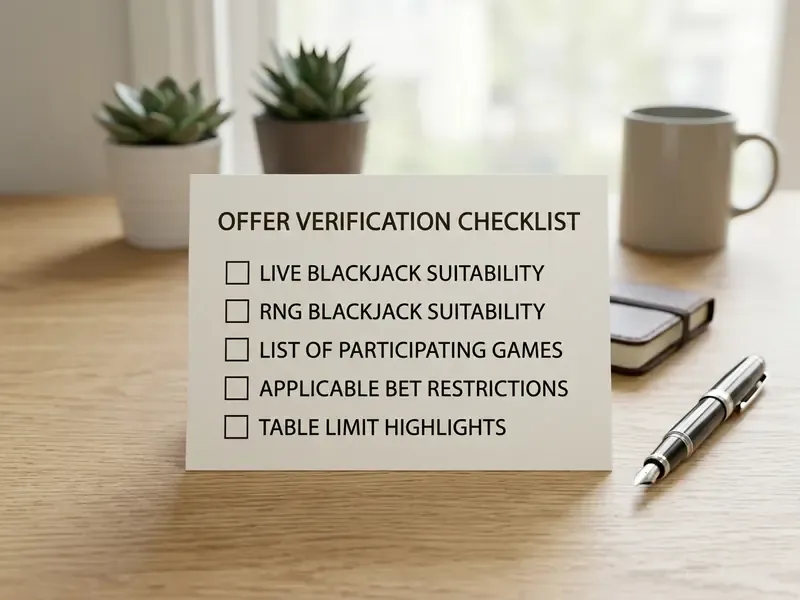
- Confirm whether the RNG or Live format is permitted for this specific bonus activation.
- Verify which specific games / providers (e.g. Evolution Gaming) are included in the offer.
- Ensure your average bet does not breach the stated bet-limit restrictions.
- Check the maximum withdrawal cap (max cashout rule) before depositing.
- Calculate the effective wagering burden using the blackjack contribution rate (typically 5–10 %).
- Confirm the offer's expiry date — most bonuses must be cleared within 7–30 days.
FAQ About Playing Blackjack Online
Yes, you can bet blackjack free without any financial commitment in practice mode — an ideal testing tool. This useful fun mode is available exclusively on virtual RNG tables (online blackjack), allowing you to explore the game before money play without spending resources. Never test new strategies without first launching the game in free format. This is the gold standard of learning before any cash session.
Yes, virtually all live blackjack today is technologically engineered for reliable mobile access, adapting bet interfaces to both vertical and horizontal smartphone orientations. The only hard requirement for playing blackjack from a phone is connection quality — LTE/4G or stable Wi-Fi — to prevent video-signal drops during your decision window. UI optimisation ensures card values remain legible regardless of screen diagonal, turning a mobile device into a fully capable launch point for responsible sessions.
Blackjack is one of the few casino games where player decisions materially affect the outcome. Choosing when to hit, stand, double or split is a skill component. However, the cards dealt are random — that is pure luck. Over the long run, perfect basic strategy reduces the house edge to roughly 0.5 %, but it never eliminates it. Bankroll management and discipline separate informed players from those who rely solely on chance. No strategy, however perfect, turns the game into a reliable income source.
Under standard six-deck rules with the dealer standing on all 17s, the house edge for basic-strategy play is approximately 0.4–0.6 %. If the table uses "Hit on soft 17," add roughly 0.2 %. Side bets carry vastly higher edges — from about 2.6 % (Perfect Pairs) to over 24 % (Lucky Ladies). Always check the specific table rules before placing a bet, because even small rule variations compound across hundreds of hands.
In RNG games the virtual deck is reshuffled before every hand, making card counting mathematically futile. In live-dealer blackjack, real cards are used, but operators employ frequent shuffles and multi-deck shoes specifically to neutralise counting strategies. While you can practise the technique in free mode, do not expect it to produce a profitable edge in any online format. The digital environment is designed to prevent exactly this.
The regulatory landscape for online gambling in Bangladesh is restrictive, and players are responsible for understanding local laws before participating. In practice, many users access international platforms via mobile wallets such as bKash or Nagad for deposits, often converting BDT to USD or EUR at the table. Live-dealer lobbies from global providers like Evolution operate irrespective of the player's country, but connection stability (4G or better) is essential for smooth gameplay. Always verify that the platform holds a recognised international licence (e.g. MGA, Curaçao, UKGC) and that your chosen payment method is supported before making a deposit. Taking five minutes to confirm these details can save you hours of frustration later.